
Accelerators.
In my previous post , I wrote a short post on B2B and B2C features of hybris, Well that doesn’t stop there, Hybris also has industry specific accelerators.

It also has Mobile specific accelerator features , but its not that popular I would say (my opinion) due to the already responsive HTML5 website that adapts well to mobile phones
Some of the important features of this are as follows.
- Fully integrated SDK for Android and iOS
- B2B and B2C Mobile App SDK & Barcode scanning
More Accelerators
As I said earlier, the below accelerators will all have certain features on top of the B2C & B2B features. I have not worked in any of the below industry specific accelerators apart from the Marketplace, Im just listing the few pointers from all the accelerators based on my research below. It is good to know
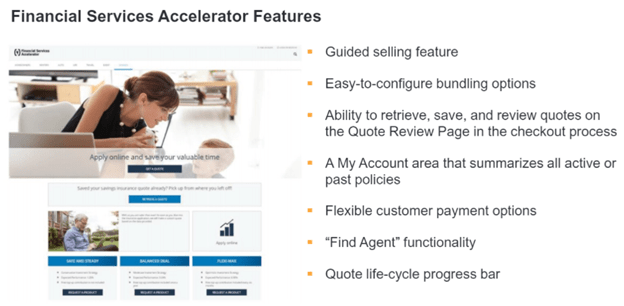
Financial Services Accelerator is a tailor-made, omnichannel solution for direct insurance companies, banks, and other financial service providers that are looking to develop a more streamlined, seamless, and personalized customer experience, while meeting the unique needs of their industry. Financial Services Accelerator comes with preconfigured reference integrations and storefront templates for insurance and banking industries. Some features of it is as follows,
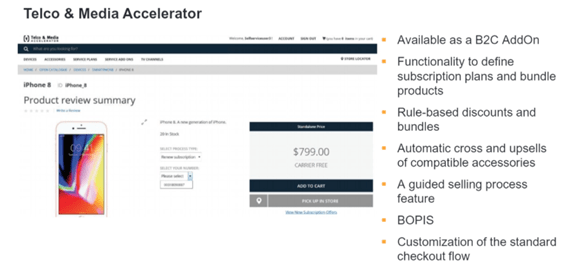
source : SAP notesThe Telco & Media Accelerator provides all the functionality and business tools required to build an omnichannel e-Commerce solution supporting the unique and individual needs of subscription based businesses including telecommunications, utilities, and media.
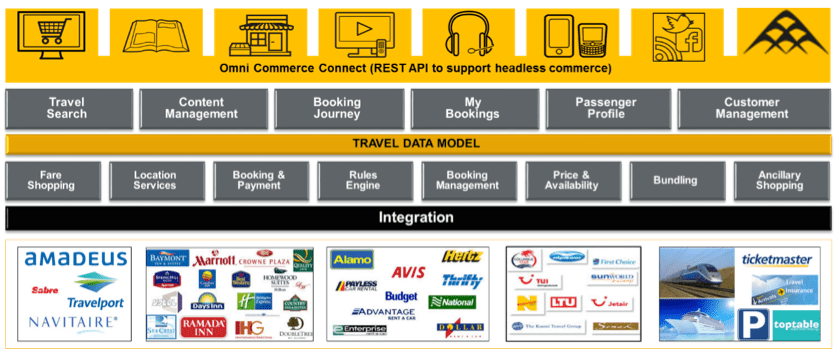
source : SAP notes The Next one is the Travel Accelator, I have read through the dev notes and its looks very promising, I have never got a chance to work on this . The latest version is SAP Commerce Travel Accelerator 1904.
The Travel Accelerator provides a pre-configured storefront, based on an airline.com B2C model, containing pages and components that deliver a responsive UI design as well as a complete booking funnel for flights and related products. It provides a suite of business services that can be exposed through any channel to deliver the complete end-to-end customer experience.
and finally the Chinese accelerator, I have not worked on this as well, But based on the research I did, it supports My account section activities in Chinese also superior search and product handling in Chinese locale & also it has inbuilt OOTB features that can plug and play with Alipay and We chat.
Marketplace Extension
The much needed one of the hour, The market place. SAP was powering the market place accelerator till recent years, but last year SAP acquired the Marketplace giant MIRAKL, it is an ocean and I don’t have any hands-on experience on the product, but I have worked with couple of market place implementations based on Adobe commerce (my heart 😉 )
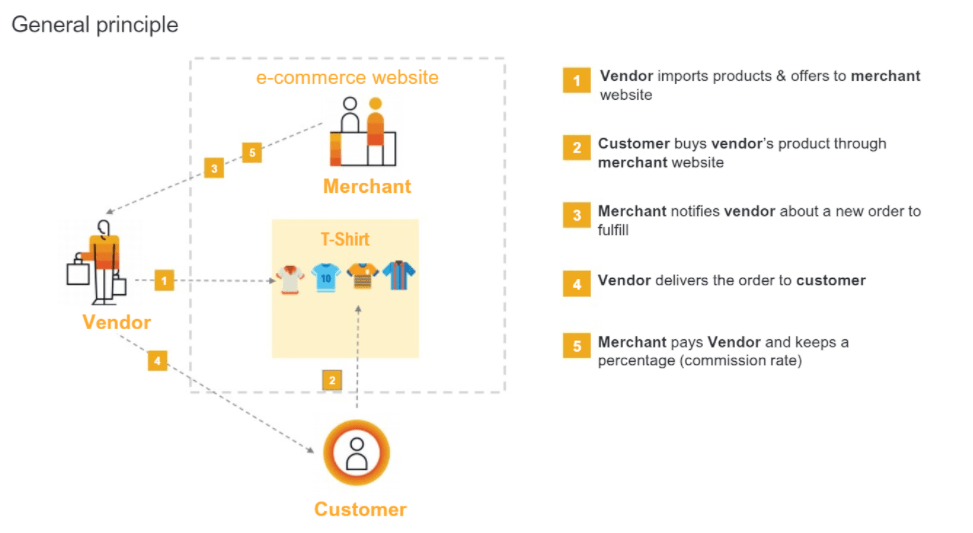
Let me explain the general principle of how the marketplace product behaves as such crisply here.
Vendors
- Product import & enrichment
- CMS custom landing page (-department store)
- Order management (Consignment)
Merchants
- Vendor user Management
- Vendor product approval
- Vendor content page approval
Managing Implementations
No two projects will ever be the same. Therefore, they need to be managed differently. The scope, size, and duration of these projects will also vary significantly from project-to-project and business-to-business. As a Business Analyst t we need to know the Jargons from delivery perspective so that our Project Manager does not give us a bad rating! 😉
There are a set of fundamental principles (Agile basic principles) and practices that need to be understood for an SAP Commerce Cloud project before going into the detail of how each phase works. These are important across all phases.
- Variable Scope – Features can easily be swapped in or out, with a focus on delivering the highest value features first. If the unexpected occurs, low-value features can be deterred to the next release. This ensures the current release is delivered on time, on budget, and with high quality.
- Time-Boxing – Time-boxing ensures that time control is baked into everyone’s mindset from day one. It’s important that nothing is allowed to extend outside its time frame.
- Iterative Development (sprints) – The Realize phase consists of iterations called sprints. This is a Scrum term meaning mini analysis, design, build, and test activity cycles that are typically fixed at 2-3 week durations.
- Just-in-Time Requirement Analysis – In a nutshell, it is the process of discovering requirements as you go. Rather than being completed up-front then updated throughout the project with change requests, they are completed iteratively using a just-in-time approach during the project.
- Acceptance Criteria – These are agreed and signed off by the customer. The functional acceptance criteria are defined and signed off sprint-by-sprint. The non-functional acceptance criteria are defined and signed off during the Explore phase, then amended through change control during the Realize phase if needed. These acceptance criteria are then used as the basis for the customer’s user acceptance testing.
- Lightweight Change Control – Using an Agile approach that allows for flexible requirements during an ongoing project enables change to be embraced rather than resisted.
- Quality Baked-in – All testing activities must be identified from the start, responsibilities assigned and planned alongside all other critical path activities. These will cover all aspects of testing including functional, non-functional, exploratory, system integration, cross-browser, and cross-device testing.
- Empowered Customer Representatives – Fast, effective and efficient collaboration and decision-making are essential to the success of the project. Because requirements are elaborated just-in-time, there is a high level of communication required at all stages of the project.
- Cross-Functional Collaboration – Cross-functional collaboration is expected through the streams; project management, business, technical and quality management. Each of these streams has a corresponding owner on the project team and the customer side. This improves communication with the customer and underlines the importance of each of these perspectives.
- Continued Improvements – Retrospectives are a vital part of the project and occur at the end of every sprint, release, and project. This process of continuous improvement becomes embedded in the mindsets of the whole project team. Not only does this improve the ways of working but is also very motivational as it empowers the team to make positive change.
- Creative Design – Often there is a separate organization or design team responsible for designing and creating the user experience and creative designs for the user interfaces. The project team is responsible for taking these designs and integrating them with the back-end development to meet the overall requirements. Collaboration with customer, design team, and project team is crucial.
- Transparent Reporting – It’s essential that these real-time progress reports be shared with the customer and that the customer is educated so they can fully understand them. This builds trust from the start and avoids surprises later. If something is going off track early, it’s far better to tackle this together with the customer at the first signs, than hiding and hoping it improves
Phewwww.. lot of verbiage on the top, I hated it I don’t think you would have gone through line by line, but knowing the above ones its really crucial.
Change control is a really important aspects and need to be monitored well, CRs should be brainstormed, Estimated and shall or shall not be included in a release based on prioritization.
Project Phases
The final one the project phases, Good to Know, Else if you have a good project Manager he/she might guide you 😉
The project delivery framework for SAP Commerce Cloud has been adapted and aligned with SAP Activate Methodology. Each of the phases is summarized for quick reference purposes. The five phases and high-level stream view is presented below.
- Prepare Phase – The where, why, how, and what of the project, including scoping, architecture, planning and costs.
- Explore and Realize Phases – The building of the solution, whether iteratively (for example, Sprints) or broken down into sequential design, build, and test sub-phases.
- Deploy Phase – The preparation and delivery of the solution into the live production environment.
- Run – This starts with the first deployment to production. It is a continuous work stream providing support and live operations management.
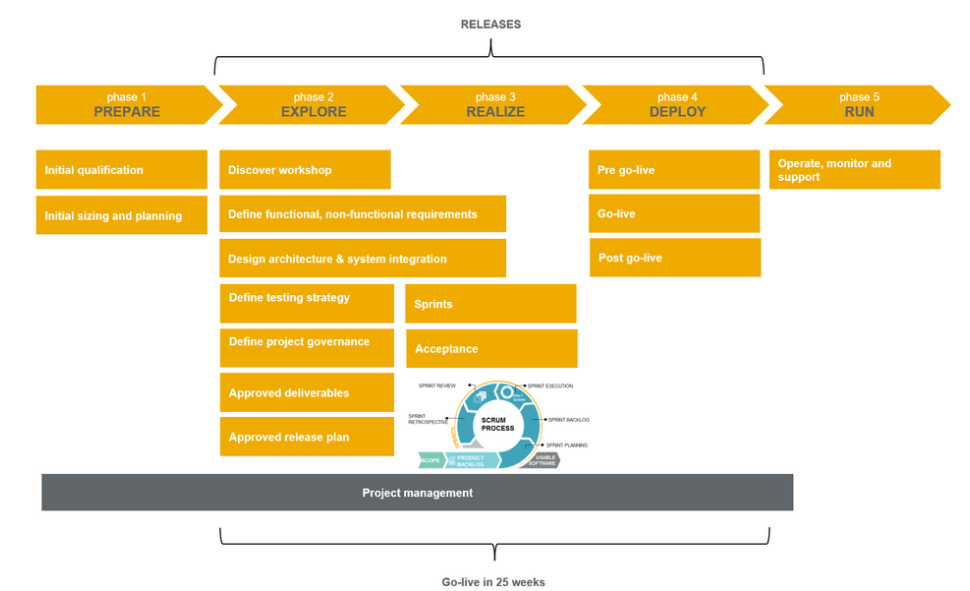
Releases and Iteration
Consultants play a huge role in this part. We need to align with the business for the MVP (phase 1, phase 2,….), need to align with the Design team on their dates and based on it we need to plan our stories for the releases . An example would be breaking down a 12-month project into 2-4 smaller releases of relatively equal duration, with each release containing all the project phases. Smaller releases can help to reduce project risk, improve time to market and give more immediate visibility to the business and end users. However, they need to be balanced with the overheads involved when starting and ending each release.
Hope you got some idea on different accelerators & how these accelerators are implemented. It was a long post unfortunately since, this is a huge topic and bedrock BA’s should know.
In my next post. I will write some features which can be controlled from SAP backoffice.
Until then Stay Safe!! mask yourself!! socially distance yourself!!

 Add to cart