
For helping out merchants & Business, we as consultants should always focus on discovering new ways to reduce cost ,improve efficiency and increase profits for merchants, of course that’s what we get paid for 😉 , I strongly think we should follow the 3 steps in consulting Discover , conceptualize, execute. In my previous posts I would have written about warehouse management and four important pillars of it,
- Inventory management.
- Delivery Processes.
- Production control
- Quality management.
In today’s post I will be talking about, Inventory management, everyone knows about it, stocking up the supplies and shipping it whenever someone orders, it is simple right, but by definition Inventory management refers to the process of ordering, storing and using a company’s inventory. This includes the management of raw materials, components and finished products, as well as warehousing and processing such items.
Though it sounds simple, Merchant find it extremely difficult in handling the complexity here, small and medium scale business were using excel/Google sheets to keep a track of what they have and make decisions on it. Working on excel sheets surely will be tiring/Prone to human errors because the person would need to take care of maintaining the storage stock, controlling the amount of product for sale and order fulfillment. Now thanks to technologies and various growing saas product companies & tally service for effectively managing SMB’s inventory
From the product perspective the importance of inventory management lies in understanding what stock you have on hand, where It is in your warehouse and how does the stock move out or move in.
What does these IM products offer you?
- Reduce costs
- Optimize fulfillment
- Provide better customer service
- Prevent loss from theft, spoilage, and returns
To throw a better a picture Inventory management tool/product shall also provide insights on customer behavior/preferences, future trends and fancy reports which makes you to do a better forecasting
Terms to Remember.
Some terms we need to be familiar of to understand more of merchant needs are as follows
- Barcode scanner- We know this very well,the device flashes a light and accurately detects the product
- Bundles –Group of products sold as a single product
- Cost of goods sold – Price for manufacturing & storing the goods
- Deadstock- Yes, your imagination is correct – Stock which are outdated and never sold
- Decoupling inventory– Safety stock which are always kept aside to handle unforeseen circumstances
- Holding cost- Cost of holding the stock in the warehouse, for example: some stock needs to be stored refrigerated in that case
- Landed cost – costs of shipping, storing, import fees, duties, taxes and other expenses associated with transporting and buying inventory.
- Lead time – We also use the terminology in commerce -time it takes a supplier to deliver goods after an order is placed along with the timeframe for a business’ reordering needs
- Order fulfillment – the complete lifecycle of an order
- Order management- Backoffice systems which governs receiving the orders, processing payments, order fulfillment, tracking & communication
- Purchase order -B2B agreement document between supplier and buyer which gives a detailed look on quantities requested, prices for products ordered or for services ordered.
- Pipeline inventory- Any inventory that is in the “pipeline” of a business’ supply chain — e.g., in production or shipping — but hasn’t yet reached its final destination.
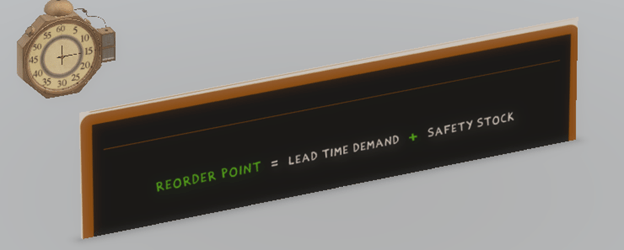
- Reordering point – This is where forecasting and reports comes into picture, the accurate point where an merchant should reorder and stock up his goods. Forumala included in the coming section
- Safety stock- Buffer stock, storing little extra of your best-selling products won’t hurt 🙂
- EOQ– Economic order quantity , How you want to reorder – This help us to quantify the order
- Sales order – The document which is sent to customer after purchase is made
- SKU– wooohhh! Im not going write anything on this. You know it better
- 3PL – third-party logistics refers to the use of an external provider to handle part or all of your warehousing, fulfillment, shipping, or any other inventory-related operation.
- Variant – Surely not a Corona variant 😉It’s a unique version of a product such as specific color or size.
Formulae that help.
Economic order quantity (EOQ) formula
The EOQ is the optimum number of products you should purchase to minimize the total cost of ordering or holding stock. This is the to go cost saving measure

Days Inventory outstanding
Days inventory outstanding (DIO), also known as days sales of inventory (DSI), refers to the number of days it takes for inventory to turn into sales. The average inventory days outstanding varies from industry to industry, but generally a lower DIO is preferred
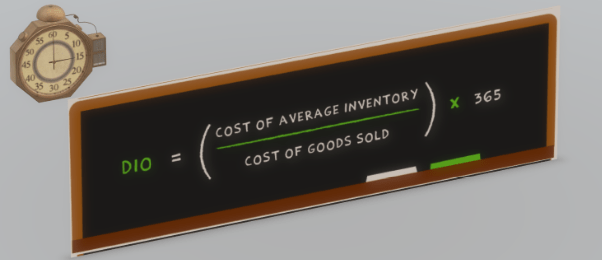
Reorder point formula
3 points play the important role here.
- Determine your lead time demand in days
- Calculate your safety stock in days
- Sum your lead time demand and your safety stock
Finally, Safety stock formula
Emergency buffer stock You want to have enough safety stock to meet demand, but not so much that increased carrying costs end up straining your finances.

To summarize, The above formula gives us an idea how things work in the inventory management, when stepping into the consulting shoes , we should feel very much in phase when an Org CXO talks to us. These jargons helps us to quickly discover, visualize and engage in consulting with ease.
There are lot of techniques which they follow along with strategies enterprises follows for this Inventory management process I will do some research /analysis in coming days on those aspects and keep you posted here. Thank you!!!!!

 Add to cart